
Not all RV parks are created equal. Some offer stability, community, and a genuine home. Others are temporary way stations where nobody stays long, management is distant, and amenities exist only on the surface.
The difference matters enormously because choosing the wrong park can cost you emotionally and financially. You might move into a community that feels permanent one month and chaotic the next. You might discover that management doesn’t care about residents, or that your neighbors change so often you never know who’s parked next to you. Worse, you might find out too late that the park isn’t designed for people who want to stay, only for people passing through.
If you’re considering long term RV living, you need to know what separates a real community from a transient campground. The good news is that the signals are consistent and knowable. Once you know what to look for, you’ll spot the difference immediately.
Trust Signal 1: Who Is Actually Running This Place?
The first thing to evaluate is management. Specifically, does the owner live on site and know the residents by name?
This matters more than you might think. An owner who lives on property has skin in the game. They wake up to the condition of the grounds every morning. They see what the residents see. If something is broken or neglected, they notice. If a resident is causing problems, they address it directly. They have every reason to keep the community well maintained because they live there too.
Compare this to parks managed by a distant company that sends in a manager three days a week. That manager might care, but they don’t wake up at the park. They don’t know whether the road was maintained yesterday or whether the laundry facilities are clean. They’re not there to see problems in real time.
Whispering Acres of Alabama operates differently. The owner lives on the property and knows every single resident. That commitment to being present shapes everything about the community. It means you’re not calling a corporate number and waiting for a callback. It means problems get noticed and fixed because someone who cares lives here.
When you visit a park, ask yourself: Do I see evidence of the owner or manager on site? Do long term residents talk about having a direct relationship with management? Can you text or call an owner instead of navigating a voicemail system? If the answer is no, keep looking.
Trust Signal 2: Who Are Your Neighbors Going to Be?
The second signal is resident curation. How much effort does the park put into choosing who lives there?
Transient parks don’t care. Your neighbor might be there for two weeks, or two years. The park’s only requirement is that your payment clears. Community is not a priority because community requires people to stay.
Real communities are different. They understand that your neighbors matter as much as the physical lot. A well managed community screens residents. Background checks keep the space safer and more peaceful. They’re not about being exclusionary; they’re about being intentional.
This single policy creates two different worlds. In a park with background checks, you’re living among people who have been vetted and verified. You know that the person parked three spaces over isn’t a flight risk and hasn’t skipped out on their last landlord. You know the community cares about who lives here because they did the work to find out.
Whispering Acres requires background checks for all residents. That’s not a corporate policy designed to filter out poor people. It’s a commitment to community integrity. It means you’re living in a neighborhood where people have been thoughtfully selected, not randomly assigned.
Ask about screening. Does the park run background checks? How many residents are long term versus short term? What’s the turnover like? If the park has trouble answering these questions, that’s a signal that they don’t really track community composition. That should concern you.

Trust Signal 3: What Happens When the Weather Turns?
Safety infrastructure is the third signal. Specifically, does the park have legitimate storm protection?
This matters if you live anywhere in the American South. Severe weather is not hypothetical. The question is not whether a bad storm will come, but when, and what happens to you when it does.
Some parks have no storm shelter. Others have a basement that technically exists but is cluttered with maintenance equipment. A real community has actual safe infrastructure.
Whispering Acres has EF5 rated storm shelters on site. That’s not marketing language. An EF5 rating means the structure can withstand the most severe tornadoes. You can walk into that shelter and know you’re genuinely protected. That infrastructure signals something important: the park’s owner cares about your safety in a crisis, not just during ordinary times.
When you’re evaluating a park, ask about storm infrastructure. How are residents supposed to shelter if a tornado warning is issued? Can you see the shelter yourself and verify it exists? Is it actually accessible, or is it locked behind a gate you can’t reach in an emergency?
If a park doesn’t have a thoughtful answer to severe weather, they’re not thinking about your actual safety. They’re thinking about liability. That’s a meaningful difference.

Trust Signal 4: Is the Pricing Honest and the Cost Stable?
The fourth signal is pricing transparency. Does the park charge a straightforward monthly rent with no hidden fees, or do they nickel and dime residents?
This is where you see the difference between communities built for people to stay and parks designed for transient camping.
At Whispering Acres, the monthly site rent is $450 plus metered electric. You pay electric separately because you use it, but the lot rental itself is fixed and transparent. There are no surprise amenity fees, no surprise monthly charges, no confusing add-ons. You know exactly what you’re paying and why.
Compare this to parks that advertise a low nightly rate but then charge for WiFi, parking, amenities, daily passes, and pet fees on top of the base rent. A single night in such a place might be cheap. But move in for a year, and you’re paying $200 more than advertised because of all the extras.
A park designed for long term living doesn’t do this. Long term residents need to know that their rent is stable and predictable. They need to budget for twelve months, not worry about fees creeping up every month.
When you visit, ask for the full cost breakdown. Ask what happens next year. If the owner hesitates or starts listing various fees, that’s a signal that they’re not built for residents who are planning to stay long term.
Trust Signal 5: Does This Feel Like a Neighborhood or a Campground?
The fifth signal is the community itself. What is the general feel? Do residents seem to know each other? Does the park invest in amenities for people who are staying, not just passing through?
A transient campground might have a pool and a pavilion. Those are fine for people who are there for a week. But they don’t signal community.
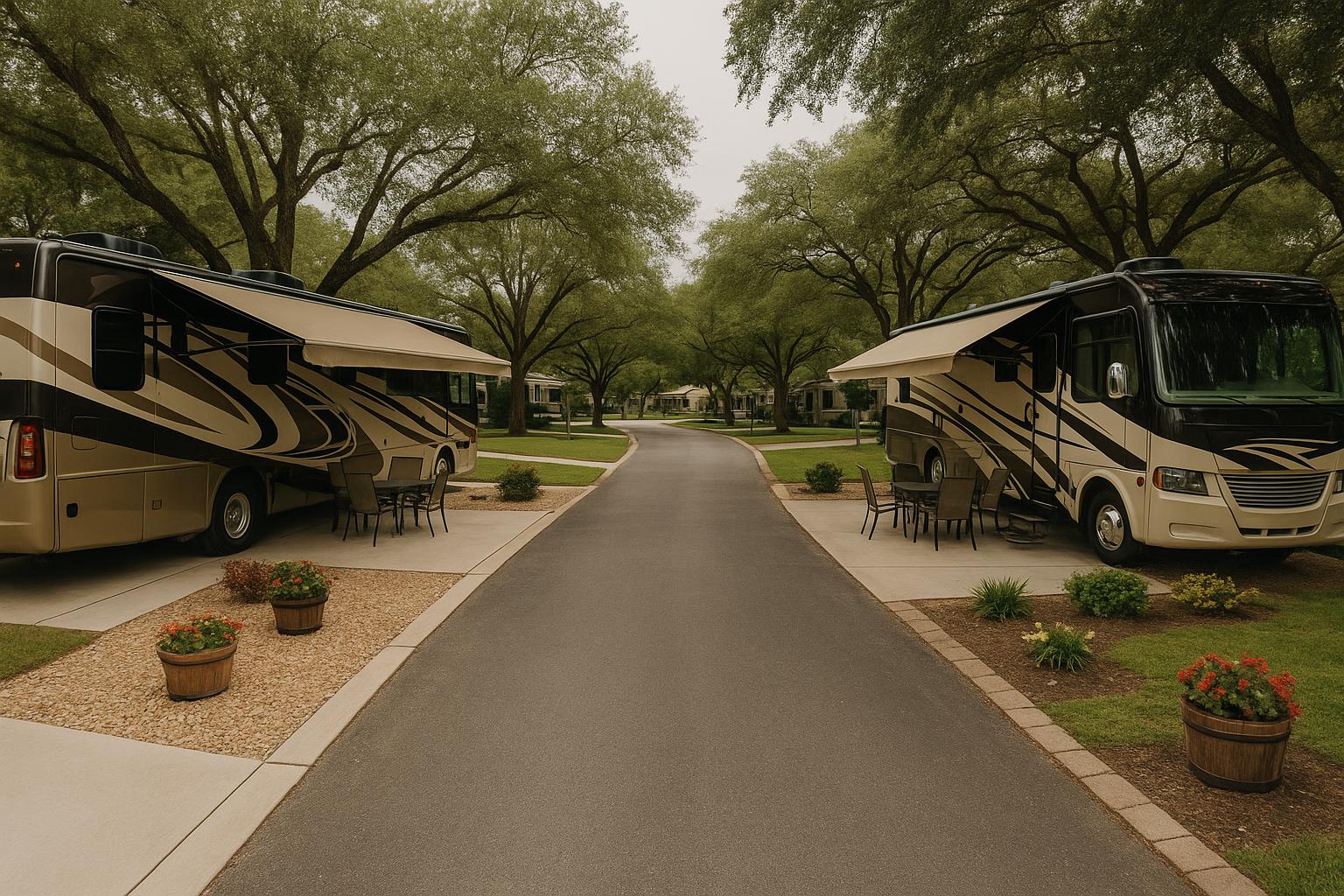
A real neighborhood has on site laundry so residents don’t have to leave the property. It has space enough that you’re not parked bumper to bumper with your neighbors. It has green space. It feels peaceful and intentional, not crowded and transient.
Whispering Acres sits on 54 acres. That acreage is protective. You have space between you and your neighbors. You have room to walk and think. You have privacy and peace.
The community also has 27 five star reviews from actual residents. Those reviews are not marketing material. They’re from people who have lived there and chosen to describe their experience publicly. When you see that kind of consistent positive feedback, you’re looking at a real community where people are actually happy.
Visit the park at different times of day. Sit for an hour and watch. Do residents seem to know each other? Are the grounds maintained? Does the community feel like a place where people have chosen to stay, or like a temporary stop?
Bringing It Together: Evaluating Your Next Home
When you’re ready to move, use these five signals as your evaluation framework. Look for an owner who lives on site and knows residents by name. Look for a community that screens residents with background checks. Look for genuine storm infrastructure designed for actual safety. Look for transparent pricing with no hidden fees. Look for a community feel where people have chosen to stay and are happy.
Whispering Acres in Tallassee, Alabama passes every single one of these tests. The owner lives on property. Residents are background checked. EF5 rated storm shelters protect you in severe weather. Rent is $450 a month plus metered electric, with no surprise fees. And the 27 resident reviews tell you exactly what it’s like to live there: stable, peaceful, and genuinely safe.
If you’re looking for a place where you can put down roots and build a stable life, these signals matter. They’re not marketing promises. They’re real, observable differences between communities built for people to stay and parks built for people to pass through.
You deserve a home where the owner cares about who lives there. Where your neighbors matter. Where management is present and responsive. Where you can weather any storm, literally and figuratively.

Visit Whispering Acres and See It for Yourself
Call to ask any of these questions. The answers will tell you whether you’ve found your home.
Check Availability